
Report 1 – Prisons Literacy Project June 2025-December 2025
15th December 2025
In June 2025 Paul Davies, the Member of Parliament for Colne Valley, and Lee Child, the world-famous author of the Jack Reacher books, decided to meet to explore a shared belief.
They were both convinced that a crucial way of making their communities safer was to reduce reoffending by prisoners.
They felt strongly that if you improved the literacy skills of certain prisoners you had a chance of preventing a proportion of them returning to prison again.
And they believed that if you could reduce reoffending by, say 10%, you would save the taxpayer an absolute fortune, given it costs £55,000 a year to keep a man or a woman in prison.
This was not about being soft on crime, far from it – ‘just look at my Jack Reacher books’ said Lee – but a measured, targeted and evidence-based approach.
Following their meeting, they took this concept in July 2025 to Lord Timpson, the prisons minister. Lord Timpson himself has an enviable record through the work of his family business of successfully rehabilitating prisoners.
Paul and Lee asked Lord Timpson if they could run a pilot phase of what they termed their Prisons Literacy Project. He gave his enthusiastic support and simply set them three criteria:
1. ensure you get the prison governors on board
2. involve the prison officers and staff wherever possible
3. move quickly, and report back to him by January 2026 (6 months later).
Inspired by this whole-hearted endorsement, Paul then set about the task of contacting interested governors/directors, and five prisons were selected to work on the pilot between August 2025 and January 2026.
These prisons were:
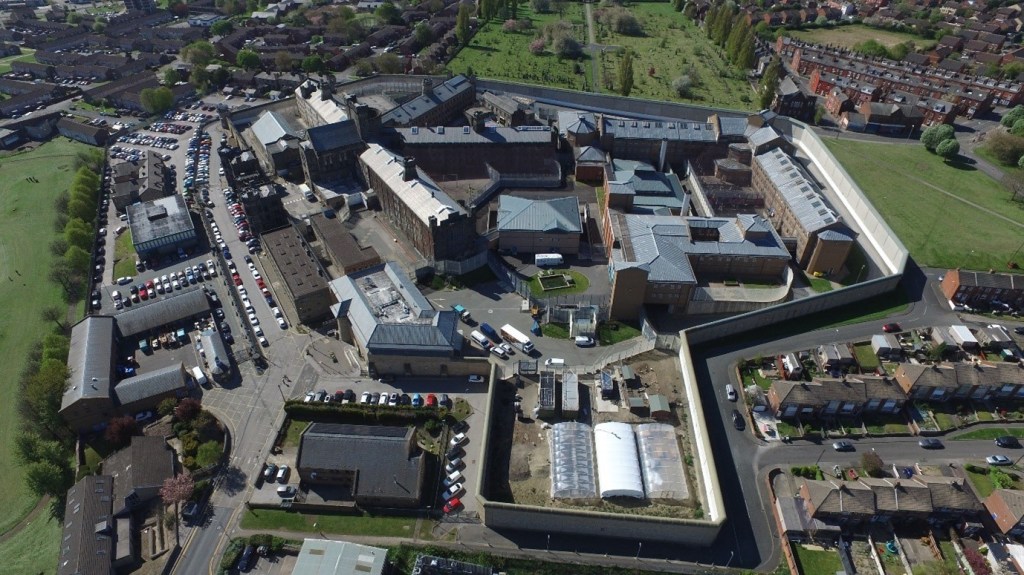
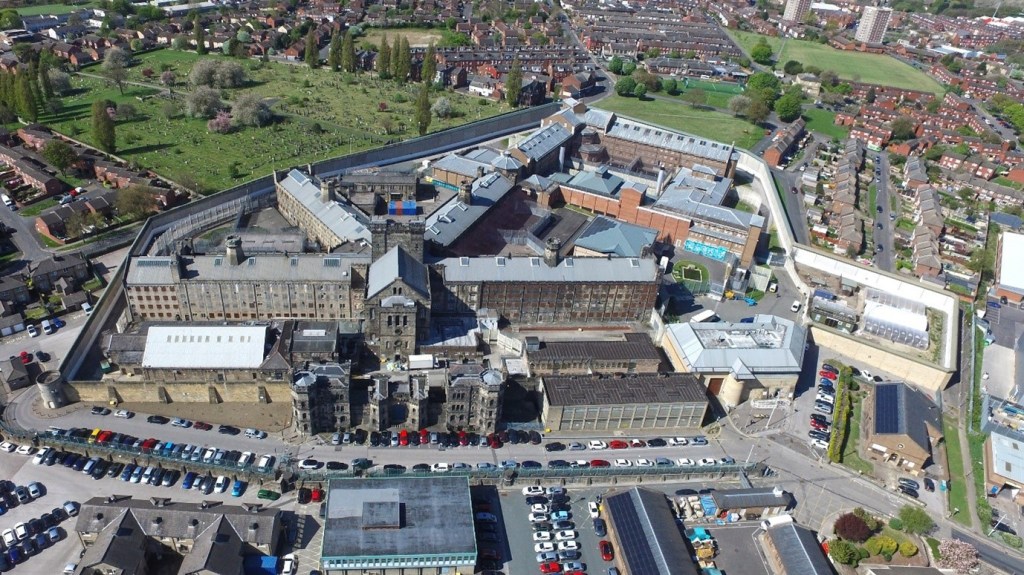
HMP Leeds – a category B prison for men housed in crowded Victorian buildings and with a high rate of self-harm and suicide.
HMP Doncaster – a category B local resettlement prison situated in South Yorkshire, operated by Serco. Doncaster houses a male population of up to 1145 individuals, approximately 200 of whom are young offenders aged 18-20.
HMP New Hall – a closed prison for female adults, juveniles, and young offenders.
HMP Millsike – a brand-new category C prison for men opened in March 2025.
HMP Kirklevington Grange – a category D Open prison for men, with an emphasis on placing prisoners in employment on release.
In August 2025 Lee and Paul started to visit these five prisons, engaging directly with prisoners, governors and heads of education. Fairly quickly a model of three author visits per prison emerged, which appealed to all the participants, and which started to deliver remarkably quick empirical results.

This three-visit model works as follows:
Visit 1
Paul and Lee visit the prison to first brief the governor and their senior management team about the Project’s aims – and to emphasise that this will be an iterative process, where their input will be crucial.
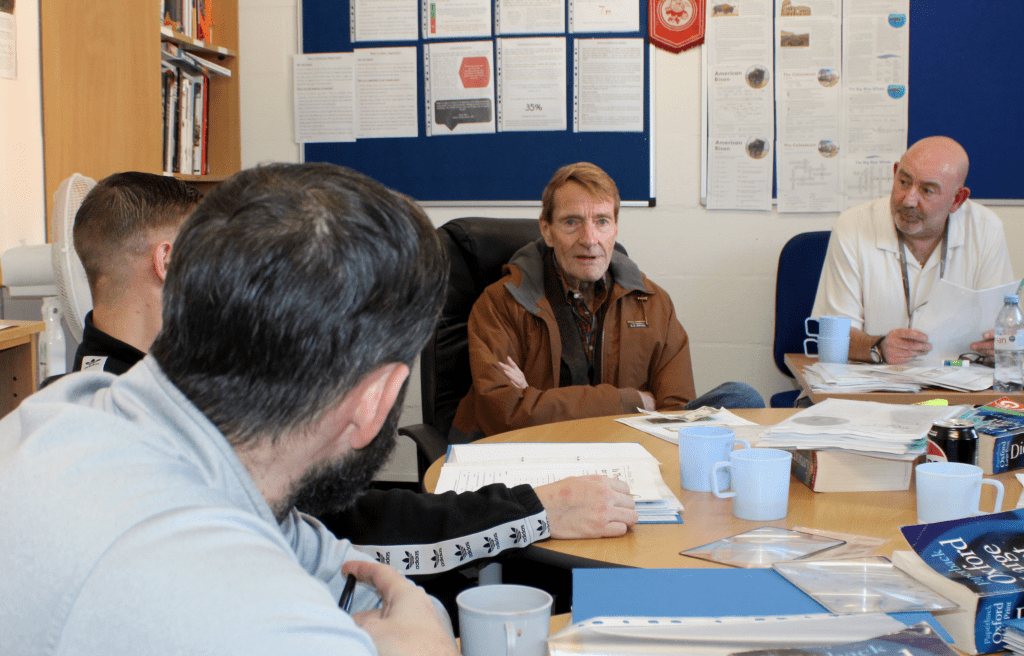
Lee then holds a Q&A session with either a large group of prisoners or two or three smaller groups, focusing on his love of reading, his desire to help improve their literacy skills and his Jack Reacher novels, films and Amazon Prime series. Lively discussion always ensues and questions about the casting of Tom Cruise as Jack Reacher abound!
After the visit, Lee sends the following invitation to certain Visit 1 prisoners who have been selected by the head of education:
Dear —-
It was a pleasure to meet you when I visited a few weeks ago. I was excited by your enthusiasm for books and reading. I look forward to seeing you again.
So here’s the deal: read my first book “Killing Floor”, and I’ll come back and we can talk about it. You can tell me if you liked it, and which parts you thought were best.
Then we can talk about what kind of things you could read next. Or, if you want to write a story of your own – maybe a made-up story, or the story of your own life, or a story about a real-life situation that interests you – we can talk about how to do that.
So give it a shot, and we’ll get together again soon.
All the best, Lee Child
Lee then arranges the delivery of 75 copies of his very first novel, Killing Floor, to the prisons for the prisoners to read before Visit 2a. The heads of education may put on targeted literacy support to prepare the men or women for this second visit.
Visit 2a
Ideally, Visit 2a takes place 4 to 6 weeks later. It focuses very much on reading and Lee returns to facilitate discussions about the prisoners’ experience of reading his first novel. They are encouraged to reflect on the power of reading, the impact it has on them and the importance of voicing their opinions in a constructive fashion.
Visit 2b
One of the great joys of the pilot has been the number of unexpected discoveries. One example happened in HMP Doncaster, where the prisoners on Visit 1 became very interested in Paul’s role as a Member of Parliament.
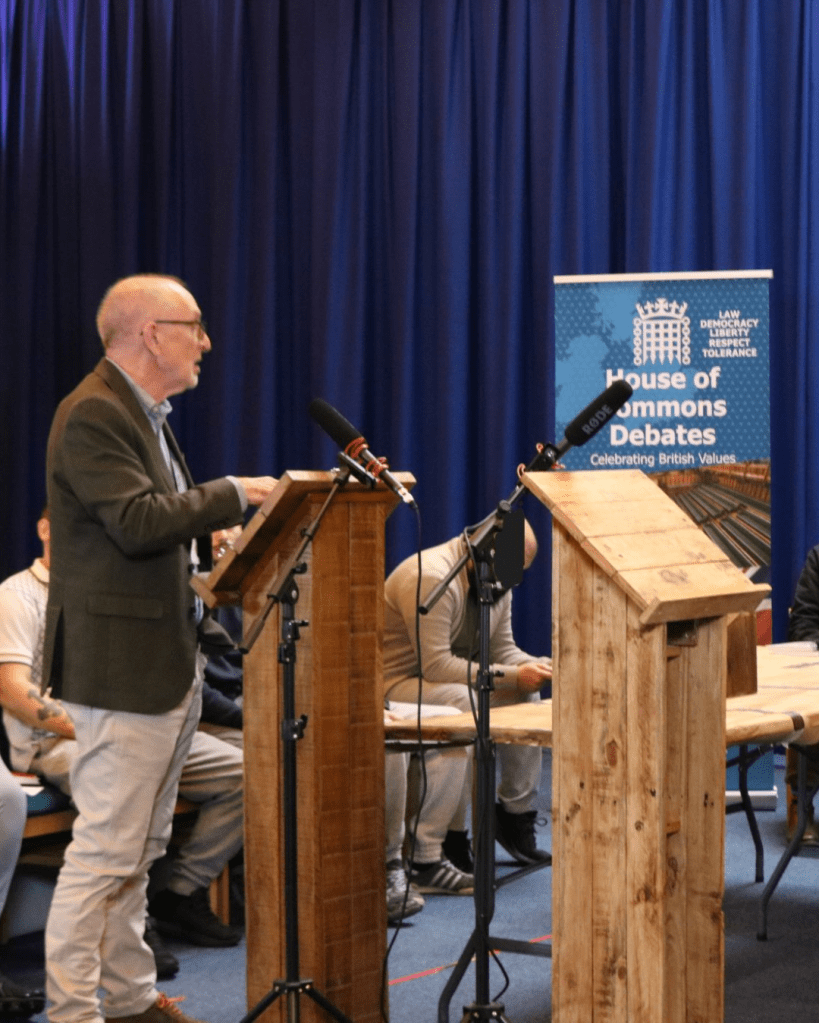
He subsequently returned to lead a non-party political, House of Commons style debate – for which the prisoners prepared intensively – on the topic of Votes for 16-year-olds. This topic was chosen by the prison. In a room with a Speaker’s Chair – made out of cardboard for the occasion – 6 prisoners prepared speeches in favour and 6 prisoners spoke against. Paul opened the debate and gave advice and feedback on what had occurred. 40 prisoners observed as ‘backbenchers’ and a vote was taken at the end.
This type of Visit is now known as a ‘Democracy Session’ and will be rolled out across other prisons going forward.
Visit 3
Visit 3 is termed ‘From sentence to story’ and reflects Paul and Lee’s discovery that the men and women were particularly attracted to the idea of improving their writing skills.
After Visit 2, Lee sends another invitation to the participants:
“It was great to chat with you all about reading on my last two visits, and I picked up on a feeling that writing could be just as important to you – and just as much fun. So … for my next visit on Friday 12th December I want you to write something. It can be anything you want – a true story about you, or your family, or your life, or a made-up story about anything you want. You could do one or two sentences, or one or two pages. I’ll read it, and we can discuss it, and you can tell me how you felt about doing it, and we can plan to do more, if you like.”
This resulted at HMP Doncaster, for example, in 49 men writing 1 to 3 sentences and 20 men submitting pieces of writing up to 3 pages worth (the maximum they were allowed). Lee receives this work in advance of the visit and gave his constructive feedback during Visit 3.

Outcomes so far
As of December 2025, the following outcomes have been noted:
- A portable model of 3 author visits and 1 MP visit to be utilised by prisons to improve the literacy skills of selected prisoners has now been tested and proven to work
- This model can be rolled out by Lee to the other authors he is recruiting to get involved in the next phase of the project (Phase 1: April 2026 to December 2026 at hopefully 20 prisons)
- Book signings and Q&A sessions for prison staff as well as prisoners have created buy in throughout the prisons
- A post-release literacy task, submitted by prisoners two months after their release to a secure website, will be incorporated into Phase 1. The task will be assessed by Lee. If it is completed to his satisfaction, Paul and Lee will write the prisoner a reference that may be of use in securing accommodation, education or employment
- Lee is in the process of arranging up to 5000 books to be delivered from publishers to each participating prison
- Lee has donated 75 copies of his first book for Visit 1 in each prison
- Lee is also investigating how publishers can permit audio books to be used on the project licence free
- Paul has developed the concept of ‘Democracy Visits’ for Visit 2b
- Paul is now engaging with other organisations interested in partnering with the Prisons Literacy Project, including the Queen’s Reading Room
- Paul has identified the need to improve selected prisoners’ financial literacy as a possible future focus for the project
- Paul has spoken in the House of Commons about the concept of Remission for Reading, where prisoners who read a book and complete an agreed literacy task are given 4 days remission for every book they read. The viability of this initiative is currently being explored
- Lee has accepted the role of Prisons Literacy Laureate for 2026
- Lee and Paul are now establishing the Never Go Back Foundation to take their work forward and oversee its activities. Never Go Back is the title of the 11th Jack Reacher novel
- Paul and Lee are now linking the work they are undertaking in prisons to Paul’s Loneliness Initiative, with a particular focus on local libraries
- The prisons that have participated have noticed a reduction in stress and anxiety in the inmates who have participated in the pilot
- A vast amount of data measuring the impact of the project is now being collated
Next Steps
In January 2026, Paul, Lee, the participating governors and their heads of education will attend a feedback session with Lord Timpson and will outline their plans for establishing Phase 1 proper of the Prisons Literacy Project from April 2026 to December 2026, with up 20 prisons in England.
There is a significant desire to expand the activities of the Project.
If you would like to get involved in the project, please contact paul.davies.mp@parliament.uk
Download the report here
 Paul Davies MP